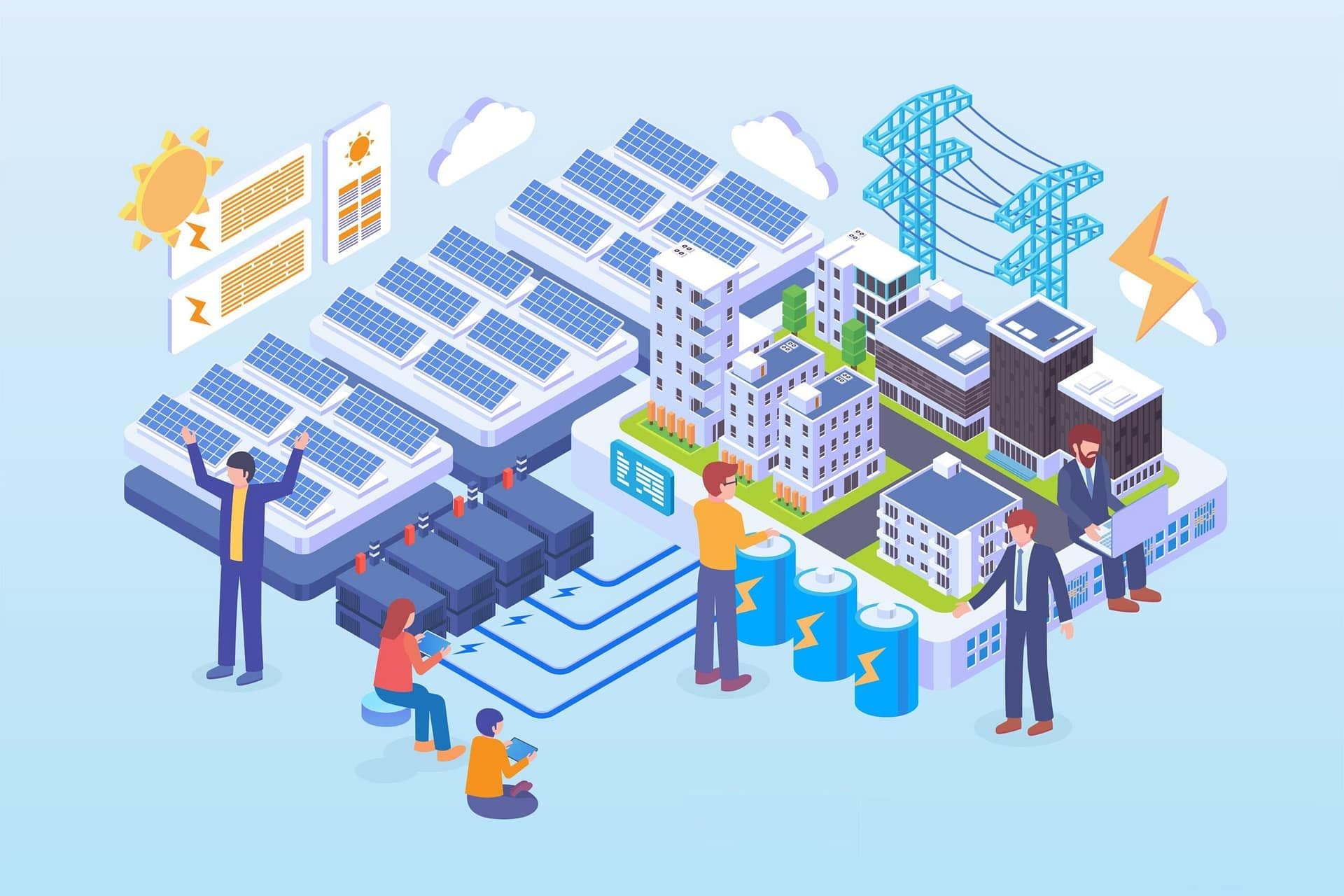
The working principle of solar energy is based on the process of generating electrical energy from sunlight (solar energy). In this process, devices called solar panels are used. Solar panels capture sunlight to generate electricity, which is then used in homes, businesses or other areas. Here are the basic steps of this process:
Table of Contents Toggle Basic Steps of the PrincipleSunlightSolar panels:Electric energy:Electricity use:Areas where solar energy is usedHeating and cooling:Water heating:Agriculture and water purification:Mechanism of operation of solar panelsSunlightSolar cells:Electron motion:Electric currentInverterElectricity use:Basic components of solar energy systemsSolar panels:Mounting system:InverterMains connection:BatteriesCharge controller:
Basic Steps of the Principle
Sunlight
The solar energy process starts when sunlight reaches solar panels. Sunlight contains particles called photons, which contain energy.
Solar panels:
Solar panels consist of solar cells, usually made of a semiconductor material called silicon. When sunlight falls on the solar cells, photons interact with silicon atoms and mobilize electrons. This leads to the generation of electric current.
Electric energy:
The electric current generated in solar cells is called direct current (DC). Electricity used in homes and workplaces is usually in the form of alternating current (AC). Therefore, the direct current from solar panels is converted into alternating current with the help of a device called an "inverter".
Electricity use:
The converted electricity is used to meet the energy needs of homes and businesses. If solar panels produce excess energy, it can be fed back into the electricity grid or stored in energy storage systems (e.g. batteries).
In summary, the working principle of solar energy is based on generating electrical energy through solar panels that capture sunlight. This process takes place as sunlight reaches the solar cells, electric current is generated, direct current is converted into alternating current and electrical energy is used. This process provides a clean and sustainable energy source.
Solar energy is not only used for electricity generation, but is also used in other areas of energy production. Here are some other areas where solar energy is used:
Areas where solar energy is used
Heating and cooling:
Solar energy can also be used for heating and cooling buildings. Special devices called solar collectors can be used to collect sunlight and heat water or air. This heated water or air can be used to heat buildings or to supply hot water. Solar energy can also be used in cooling systems. For example, solar-powered absorption cooling systems can cool buildings using solar-heated liquid.
Water heating:
Solar energy can also be used to meet hot water needs. Solar thermal collectors collect solar energy and heat water. This heated water can be used in homes and businesses. These systems reduce energy costs and reduce dependence on fossil fuels.
Agriculture and water purification:
Solar energy can also be used in agricultural irrigation and water treatment systems. Solar pumps can transport water resources to agricultural fields and water treatment plants by meeting their electrical energy needs from solar panels. Solar energy can also be used for desalination of salt water. Solar-powered desalination systems can be used in water-scarce regions by converting salty water into fresh water.
In addition to electricity generation in this way, solar energy is also used in various energy production fields such as heating, cooling, water heating, agriculture and water purification. This shows that solar energy is a flexible and versatile energy source.
Mechanism of operation of solar panels
The working mechanism of solar panels is based on the process of capturing sunlight (photons) and converting this energy into electrical energy. I explain this process below in a way that an ordinary person can understand:
Sunlight
The working mechanism of solar panels starts when sunlight reaches the panels. Sunlight contains photons, particles that carry energy.
Solar cells
Solar panels contain small semiconductor structures called solar cells. These cells are usually made of semiconductor materials such as silicon. When sunlight falls on solar cells, photons carrying energy interact with silicon atoms.
Electron motion:
The interaction between photons and silicon atoms causes electrons to break away from the silicon atoms. These detached electrons start to move and this movement leads to the generation of electric current.
Electric current
This electric current generated in solar cells is called direct current (DC). However, the electrical energy used in homes and businesses is usually in the form of alternating current (AC).
Inverter
Direct current obtained from solar panels must be converted into alternating current in order to be used in homes and workplaces. This conversion is realized with the help of a device called an "inverter".
Electricity use:
The alternating current converted by the inverter is used to meet the energy needs of homes, businesses or other areas.
In summary, the working mechanism of solar panels is based on the process of capturing sunlight and converting it into electrical energy. This process takes place in the form of sunlight reaching the solar cells, electron movement, the formation of electric current, the conversion of direct current into alternating current and the use of electrical energy.
Basic components of solar energy systems
Solar energy systems convert sunlight into electrical energy to meet energy needs. The basic components of these systems are:
Solar panels:
The most important component of solar energy systems are solar panels. Solar panels are flat structures made of solar cells that capture sunlight and convert it into electrical energy. Solar cells are usually made of semiconductor materials such as silicon.
Mounting system:
Solar panels are supported and fixed by structures called mounting systems. Mounting systems are used to place solar panels on roofs, floors or other structures. These systems ensure that the solar panels remain stable and resistant to weather conditions and wind.
Inverter
The electrical energy obtained from solar panels is in the form of direct current (DC). However, the electrical energy used in homes and businesses is usually in the form of alternating current (AC). The inverter converts the direct current (DC) from solar panels into alternating current (AC) so that the energy can be used in homes and businesses.
Mains connection:
Solar energy systems can also be connected to the grid. This way, when the solar system does not produce enough energy, additional energy can be taken from the grid. Likewise, when the solar system produces excess energy, this energy can be fed back into the grid.
Batteries
Some solar power systems are equipped with batteries to store energy. Batteries store part of the energy produced by the solar system and can be used to meet energy needs when there is no sunlight (at night or in overcast weather conditions).
Charge controller:
In solar systems equipped with batteries, the charge controller is also an important component. The charge controller directs the energy from the solar panels to the batteries and ensures that the batteries are charged correctly. It also prevents the batteries from overcharging or discharging.
Want to discuss a solar project for your facility?
Tell us about your site and our engineering team will scope feasibility, ROI and procurement.